
<!-- LOEB:EN -->
Rabbi Menachem Mendel Schneerson is widely regarded as one of the most influential Jewish leaders of the 20th century, having transformed a small, Holocaust-depleted sect into a global powerhouse of Jewish outreach of the Chabad-Lubavitch Hasidic movement. Throughout his leadership from Brooklyn, New York City, the Rebbe spoke intensely about the imminent arrival of the messianic era, urging his followers to prepare for it through acts of goodness and Jewish observance. During the latter decades of his life, a fervent belief arose among many of his followers that he was in fact the Jewish Messiah. Since the Messiah is believed to reconstruct the Holy Temple in Jerusalem and live in Israel, his followers built in 1986 a house for him in Kfar Chabad Israel which is an exact replica of his apartment at 770 Eastern Parkway in Crown Heights, Brooklyn. The Israeli replica was constructed to precisely mirror the layout of the original, including a highly detailed reproduction of the Rebbe’s private office, complete with identical furniture, bookcases, and religious texts.
When Rabbi Schneerson passed away on June 12, 1994, at the age of 92, without appearing as the Messiah, the event created a massive theological crisis for the Chabad-Lubavitch movement, as traditional Jewish theology does not typically accommodate a Messiah who dies before completing the redemption. The movement ultimately fractured into two main ideological factions regarding his identity:
(i) The Messianists faction maintains that the Rebbe is still the Messiah. Some believe he did not actually die in a spiritual sense or that his death was an illusion, while others believe he passed away but will soon be resurrected to complete his messianic mission.
(ii) The Anti-Messianists including the mainstream and official leadership of Chabad-Lubavitch disavow public messianic declarations. They believe he could have been the Messiah had God willed it, but they accept his physical passing.
Supersymmetry (or SUSY) is a proposed symmetry in physics that suggests every particle in the universe has a hidden “superpartner” with different spin properties. The symmetry pairs up two major families of particles: fermions (matter particles like quarks and electrons) and bosons (force-carrying particles like photons). Over the past four decades, the lightest supersymmetric particle has been widely regarded as an ideal candidate for dark matter. Supersymmetry became also a fundamental backbone of modern string theory.
The Large Hadron Collider (LHC) at CERN was widely anticipated to discover experimental evidence of Supersymmetry in its natural parameter space. Despite more than a decade of high-energy proton collisions, data from the ATLAS and CMS detector have completely emptied the expected discovery zones for the heavier “superpartner” particles (sparticles) predicted by the theory.
The absence of evidence has forced a massive shift in theoretical physics. The original, most elegant versions of the theory were ruled out. The cultural and scientific grip of the theory has weakened to the point where primary research teams at CERN have begun dismantling dedicated supersymmetry working groups, shifting focus toward broader data-driven anomalies. The physics community split into two parts:
(i) Some theorists, including those advocating for string theory, have adjusted the parameters to keep the concept alive by proposing alternative frameworks. These include more complex models, like the phenomenological MSSM (pMSSM) or Split SUSY, allow for scenarios where superpartners are lighter but hidden because their decay signatures mimic background noise. Others moved the goalposts by arguing that superpartners exist at much higher mass scales than previously hoped.
(ii) As the High-Luminosity LHC and future runs collect more data, the mainstream of the physics community has largely entered a “bottom-up” era, looking at real data glitches and anomalies rather than trying to force the universe to fit a beautiful top-down theory of supersymmetry.
Science is done by scientists and it often includes believers in theoretical ideas that are as appealing as the religious belief that Rabbi Menachem Mendel Schneerson is the Jewish Messiah.
But there is more to this similarity between science and religion.
Our understanding of the Universe allows it to be unlimited in space. Nevertheless, our understanding is bounded as we go back in time. Albert Einstein’s equations of General Relativity break down at the Big Bang singularity and leave the question of what happened before that time open. Whereas mainstream scientists believe that a predictive (but so far elusive) theory of quantum gravity will inform us of what happened before the Big Bang, religious people believe in a creator.
Science and religion can genuinely collide when they make claims about the same observable territory. Examples include the age of the Universe and Earth or the mechanism behind biological diversity. However, they do not collide in metaphysical questions, such as whether there is a God, what happens after death, what gives life a meaning. Most people, including practicing scientists, do not experience these domains as being in conflict day to day. They just treat them as different categories of questions.
The line between religious belief and scientific reasoning might be blurred more dramatically if humanity ever encounters an alien technology far more advanced than it knows, appearing as a magical biblical miracle. Would a visitor with a much higher intelligence than ours appear to some of us as a Messiah or a God?
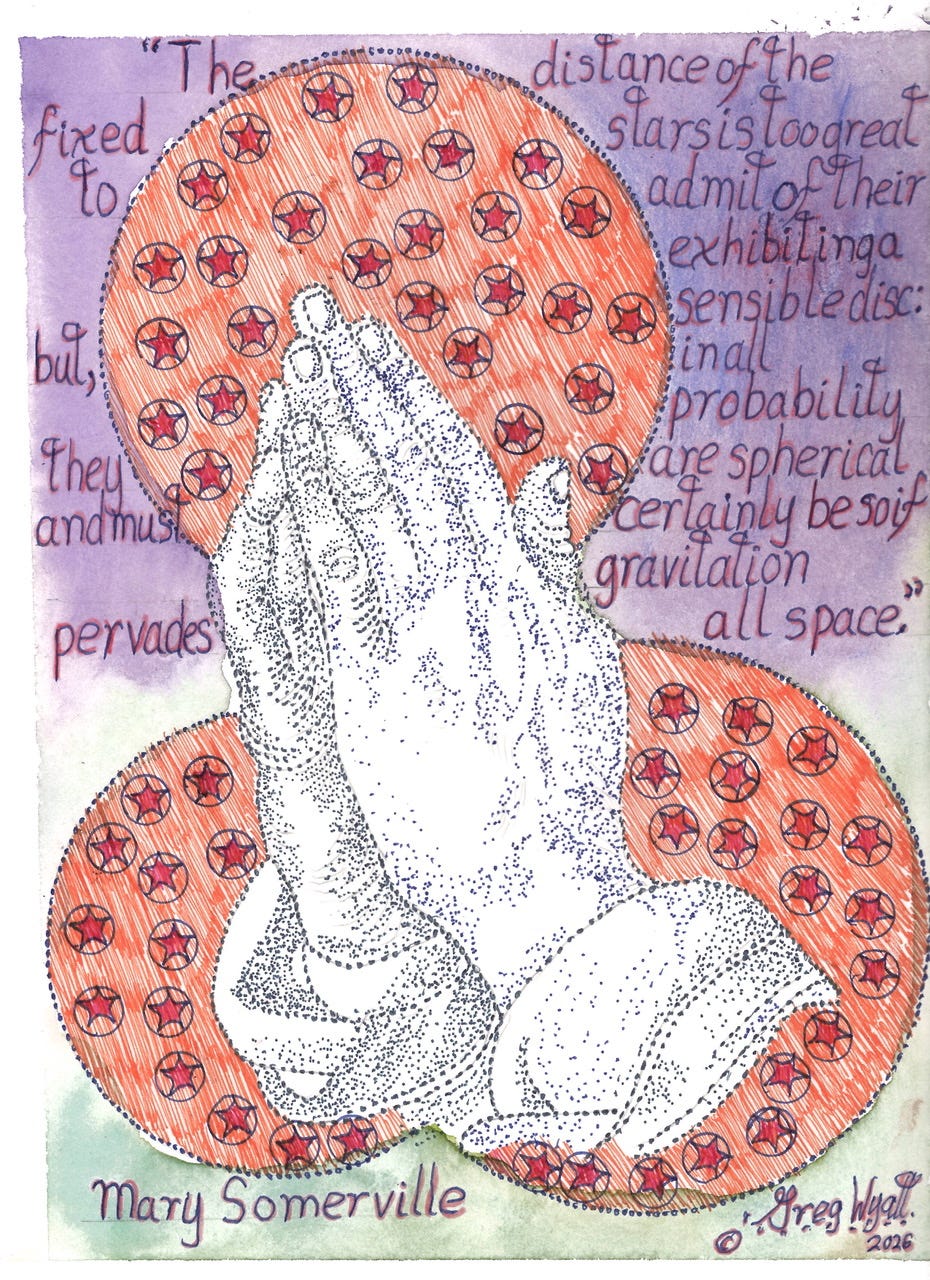
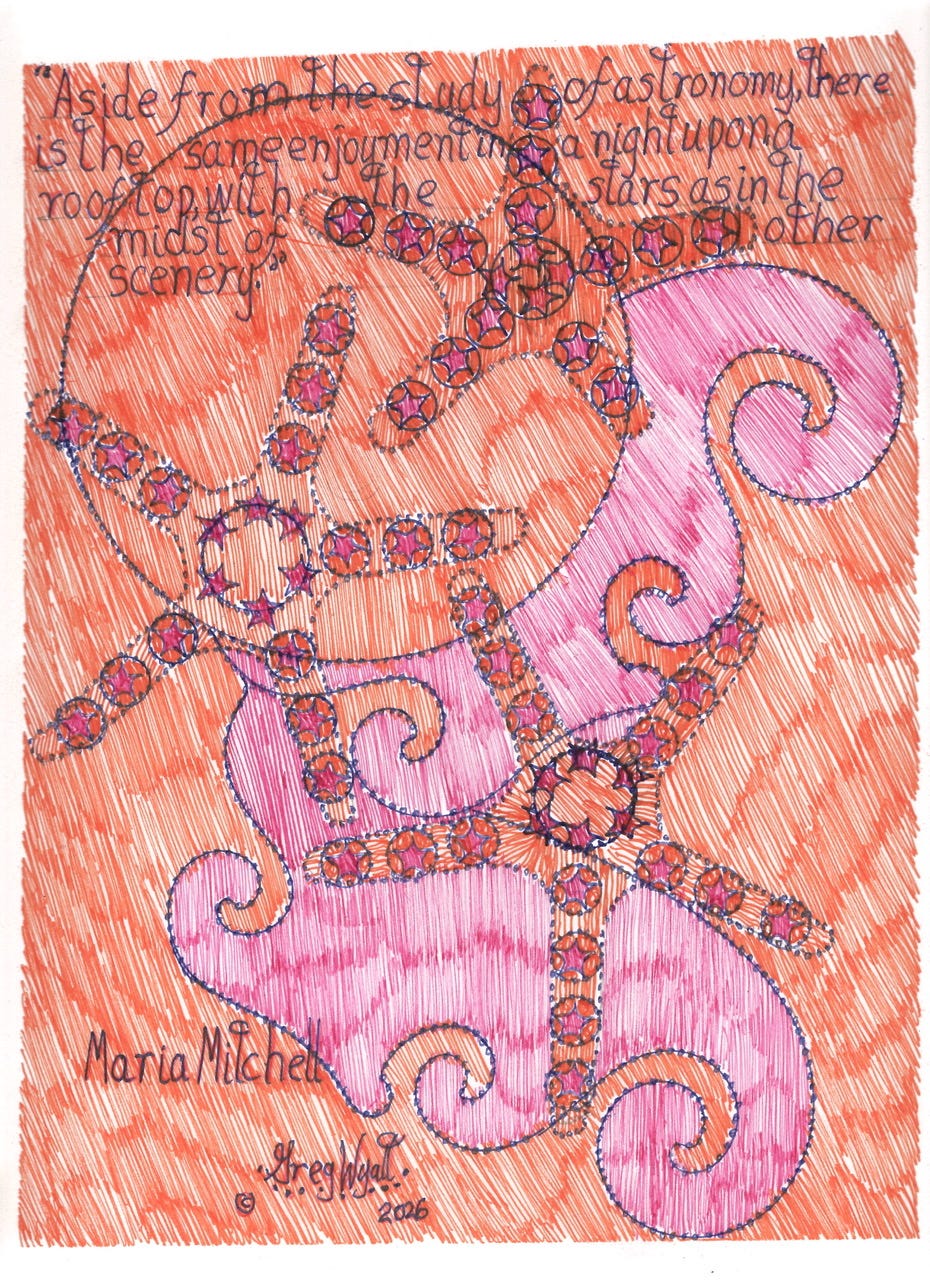
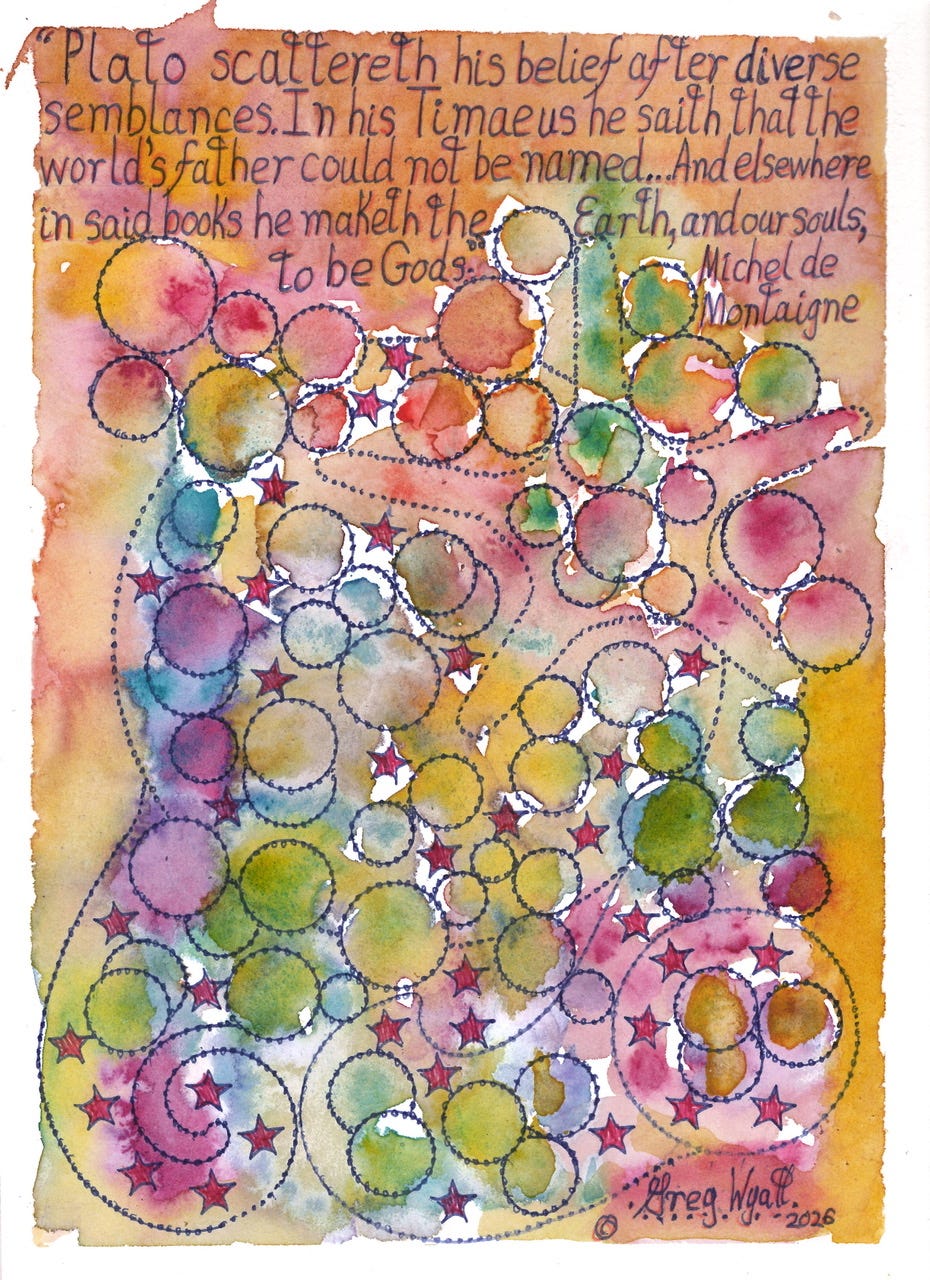
In this essay, I featured eight amazingly beautiful watercolors from a series created and sent to me by the celebrated artist, Greg Wyatt.
Professional website:
https://lweb.cfa.harvard.edu/~loeb/
https://avi-loeb.medium.com/https://www ... sorAviLoeb
https://open.spotify.com/show/1zhndXkvS ... rofAviLoeb
<!-- LOEB:CN -->
梅纳赫姆·门德尔·施内尔森拉比被广泛认为是20世纪最具影响力的犹太领袖之一,他将一个在纳粹大屠杀中遭受重创的小教派,发展成为哈巴德-卢巴维奇哈西德派运动中全球犹太教传播的强大力量。在他于纽约布鲁克林领导期间,这位拉比始终热情洋溢地谈论弥赛亚时代的即将到来,并敦促他的信徒们……允许他们通过善良的行为和犹太人的遵守来为它做准备。在他生命的后几十年里,他的许多追随者热切地相信他实际上是犹太弥赛亚。由于弥赛亚被认为重建耶路撒冷的圣殿并居住在以色列,他的追随者于1986年在Kfar Chabad Israel为他建造了一所房子,这是他的AP的精确复制品布鲁克林皇冠高地东大道770号的艺术品。 以色列复制品的构造精确地反映了原来的布局,包括Rebbe私人办公室的非常详细的复制品,配有相同的家具,书柜和宗教文本。
当拉比施尼尔森于1994年6月12日去世时,享年92岁,没有以弥赛亚的身份出现,事件这给哈巴德-卢巴维奇运动带来了巨大的神学危机,因为传统的犹太神学通常无法接受弥赛亚在完成救赎之前就死去。最终,该运动因弥赛亚的身份问题而分裂成两大意识形态派别:
(i)弥赛亚派坚持认为拉比仍然是弥赛亚。有些人认为他实际上并没有死于灵性死亡。或者他的死是一种幻觉,而其他人则认为他去世了,但很快就会复活以完成他的弥赛亚使命。
( ii )反弥赛亚主义者,包括Chabad-Lubavitch的主流和官方领导,否认公开的弥赛亚宣言。 他们相信,如果上帝愿意,他本可以成为弥赛亚,但他们接受他的肉体逝世。
超对称性(或超对称性(SUSY)是物理学中提出的一种对称性,它认为宇宙中每个粒子都存在一个隐藏的“超对称伙伴”,其自旋性质与自身不同。这种对称性将两大类粒子配对:费米子(如夸克和电子等物质粒子)和玻色子(如光子等力载体粒子)。在过去的四十年里,最轻的超对称粒子被广泛认为是……暗物质的理想候选者。 超对称性也成为现代弦理论的基本支柱。
欧洲核子研究中心( CERN )的大型强子对撞机( LHC )被广泛期待在其自然参数空间中发现超对称性的实验证据。 尽管经历了十多年的高能质子碰撞,但ATLAS和CMS探测器的数据已经完全清空了预期的发现y理论预测的较重“超级伙伴”粒子(粒子)的区域。
证据的缺乏迫使理论物理学发生了巨大的转变。 该理论最原始、最优雅的版本被排除在外。 该理论的文化和科学控制已经减弱到CERN的主要研究团队已经开始拆除专门的超对称工作组的地步并将研究重点转向更广泛的数据驱动型异常现象。物理学界分裂成两派:
(i) 一些理论家,包括弦理论的支持者,通过提出替代框架来调整参数,以维持这一概念的活力。这些框架包括更复杂的模型,例如现象学最小超对称标准模型(pMSSM)或分裂超对称模型,允许超对称粒子质量较轻的情况。ut隐藏,因为它们的衰减特征模仿背景噪音。 其他人则争辩说,超级合作伙伴的存在规模比以前希望的要大得多。
( ii )随着高光度大型强子对撞机和未来的运行收集更多的数据,物理学界的主流在很大程度上进入了一个“自下而上”的时代,关注真实的数据故障和异常,而不是试图强迫以适应美丽的自上而下的超对称理论。
科学是由科学家完成的,它通常包括理论思想的信徒,这些理论思想与拉比梅纳赫姆·孟德尔·施内尔森( Menachem Mendel Schneerson )是犹太弥赛亚的宗教信仰一样吸引人。
但科学和宗教之间的这种相似性还有更多。
我们对宇宙的理解使它在太空中是无限的。然而,随着我们回溯过去,我们的理解终究是有限的。阿尔伯特·爱因斯坦的广义相对论方程在大爆炸奇点处失效,使得大爆炸之前究竟发生了什么成为一个悬而未决的问题。主流科学家认为,一个预测性的(但迄今为止仍难以捉摸的)量子引力理论将揭示大爆炸之前发生的事情,而宗教人士则相信一种创造论。代理人。
当科学与宗教对同一可观测领域提出主张时,它们之间确实可能存在冲突。例如,宇宙和地球的年龄,或者生物多样性背后的机制。然而,在形而上学问题上,例如是否存在上帝、死后会发生什么、生命的意义是什么,它们之间并不存在冲突。大多数人,包括一些从事科学研究的人,都不会在形而上学问题上与宗教产生冲突。他们每天都会感受到这些领域之间的冲突。他们只是把这些领域当作不同类别的问题来处理而已。
如果人类遭遇远超自身认知的外星科技,并以圣经中奇迹般的方式呈现,那么宗教信仰与科学推理之间的界限可能会更加模糊。一位拥有远超我们智慧的访客会如何出现呢?我们中的一些人是弥赛亚还是神?
在这篇文章中,我展示了由著名艺术家格雷格·怀亚特( Greg Wyatt )创作并发送给我的系列作品中的八幅令人惊叹的美丽水彩画。
专业网站:
https://lweb.cfa.harvard.edu/~loeb/
https://avi-loeb.medium.com/https://www.youtube.com/ @ ProfessorAviLoeb
https://open.spotify.com/show/1zhndXkvS ... rofAviLoeb
<!-- LOEB:END -->
---
原文链接:https://avi-loeb.medium.com/on-the-role ... d02f737e15
作者:Avi Loeb(哈佛大学天文系教授)
Rabbi Menachem Mendel Schneerson is widely regarded as one of the most influential Jewish leaders of the 20th century, having transformed a small, Holocaust-depleted sect into a global powerhouse of Jewish outreach of the Chabad-Lubavitch Hasidic movement. Throughout his leadership from Brooklyn, New York City, the Rebbe spoke intensely about the imminent arrival of the messianic era, urging his followers to prepare for it through acts of goodness and Jewish observance. During the latter decades of his life, a fervent belief arose among many of his followers that he was in fact the Jewish Messiah. Since the Messiah is believed to reconstruct the Holy Temple in Jerusalem and live in Israel, his followers built in 1986 a house for him in Kfar Chabad Israel which is an exact replica of his apartment at 770 Eastern Parkway in Crown Heights, Brooklyn. The Israeli replica was constructed to precisely mirror the layout of the original, including a highly detailed reproduction of the Rebbe’s private office, complete with identical furniture, bookcases, and religious texts.
When Rabbi Schneerson passed away on June 12, 1994, at the age of 92, without appearing as the Messiah, the event created a massive theological crisis for the Chabad-Lubavitch movement, as traditional Jewish theology does not typically accommodate a Messiah who dies before completing the redemption. The movement ultimately fractured into two main ideological factions regarding his identity:
(i) The Messianists faction maintains that the Rebbe is still the Messiah. Some believe he did not actually die in a spiritual sense or that his death was an illusion, while others believe he passed away but will soon be resurrected to complete his messianic mission.
(ii) The Anti-Messianists including the mainstream and official leadership of Chabad-Lubavitch disavow public messianic declarations. They believe he could have been the Messiah had God willed it, but they accept his physical passing.
Supersymmetry (or SUSY) is a proposed symmetry in physics that suggests every particle in the universe has a hidden “superpartner” with different spin properties. The symmetry pairs up two major families of particles: fermions (matter particles like quarks and electrons) and bosons (force-carrying particles like photons). Over the past four decades, the lightest supersymmetric particle has been widely regarded as an ideal candidate for dark matter. Supersymmetry became also a fundamental backbone of modern string theory.
The Large Hadron Collider (LHC) at CERN was widely anticipated to discover experimental evidence of Supersymmetry in its natural parameter space. Despite more than a decade of high-energy proton collisions, data from the ATLAS and CMS detector have completely emptied the expected discovery zones for the heavier “superpartner” particles (sparticles) predicted by the theory.
The absence of evidence has forced a massive shift in theoretical physics. The original, most elegant versions of the theory were ruled out. The cultural and scientific grip of the theory has weakened to the point where primary research teams at CERN have begun dismantling dedicated supersymmetry working groups, shifting focus toward broader data-driven anomalies. The physics community split into two parts:
(i) Some theorists, including those advocating for string theory, have adjusted the parameters to keep the concept alive by proposing alternative frameworks. These include more complex models, like the phenomenological MSSM (pMSSM) or Split SUSY, allow for scenarios where superpartners are lighter but hidden because their decay signatures mimic background noise. Others moved the goalposts by arguing that superpartners exist at much higher mass scales than previously hoped.
(ii) As the High-Luminosity LHC and future runs collect more data, the mainstream of the physics community has largely entered a “bottom-up” era, looking at real data glitches and anomalies rather than trying to force the universe to fit a beautiful top-down theory of supersymmetry.
Science is done by scientists and it often includes believers in theoretical ideas that are as appealing as the religious belief that Rabbi Menachem Mendel Schneerson is the Jewish Messiah.
But there is more to this similarity between science and religion.
Our understanding of the Universe allows it to be unlimited in space. Nevertheless, our understanding is bounded as we go back in time. Albert Einstein’s equations of General Relativity break down at the Big Bang singularity and leave the question of what happened before that time open. Whereas mainstream scientists believe that a predictive (but so far elusive) theory of quantum gravity will inform us of what happened before the Big Bang, religious people believe in a creator.
Science and religion can genuinely collide when they make claims about the same observable territory. Examples include the age of the Universe and Earth or the mechanism behind biological diversity. However, they do not collide in metaphysical questions, such as whether there is a God, what happens after death, what gives life a meaning. Most people, including practicing scientists, do not experience these domains as being in conflict day to day. They just treat them as different categories of questions.
The line between religious belief and scientific reasoning might be blurred more dramatically if humanity ever encounters an alien technology far more advanced than it knows, appearing as a magical biblical miracle. Would a visitor with a much higher intelligence than ours appear to some of us as a Messiah or a God?
In this essay, I featured eight amazingly beautiful watercolors from a series created and sent to me by the celebrated artist, Greg Wyatt.
Professional website:
https://lweb.cfa.harvard.edu/~loeb/
https://avi-loeb.medium.com/https://www ... sorAviLoeb
https://open.spotify.com/show/1zhndXkvS ... rofAviLoeb
<!-- LOEB:CN -->
梅纳赫姆·门德尔·施内尔森拉比被广泛认为是20世纪最具影响力的犹太领袖之一,他将一个在纳粹大屠杀中遭受重创的小教派,发展成为哈巴德-卢巴维奇哈西德派运动中全球犹太教传播的强大力量。在他于纽约布鲁克林领导期间,这位拉比始终热情洋溢地谈论弥赛亚时代的即将到来,并敦促他的信徒们……允许他们通过善良的行为和犹太人的遵守来为它做准备。在他生命的后几十年里,他的许多追随者热切地相信他实际上是犹太弥赛亚。由于弥赛亚被认为重建耶路撒冷的圣殿并居住在以色列,他的追随者于1986年在Kfar Chabad Israel为他建造了一所房子,这是他的AP的精确复制品布鲁克林皇冠高地东大道770号的艺术品。 以色列复制品的构造精确地反映了原来的布局,包括Rebbe私人办公室的非常详细的复制品,配有相同的家具,书柜和宗教文本。
当拉比施尼尔森于1994年6月12日去世时,享年92岁,没有以弥赛亚的身份出现,事件这给哈巴德-卢巴维奇运动带来了巨大的神学危机,因为传统的犹太神学通常无法接受弥赛亚在完成救赎之前就死去。最终,该运动因弥赛亚的身份问题而分裂成两大意识形态派别:
(i)弥赛亚派坚持认为拉比仍然是弥赛亚。有些人认为他实际上并没有死于灵性死亡。或者他的死是一种幻觉,而其他人则认为他去世了,但很快就会复活以完成他的弥赛亚使命。
( ii )反弥赛亚主义者,包括Chabad-Lubavitch的主流和官方领导,否认公开的弥赛亚宣言。 他们相信,如果上帝愿意,他本可以成为弥赛亚,但他们接受他的肉体逝世。
超对称性(或超对称性(SUSY)是物理学中提出的一种对称性,它认为宇宙中每个粒子都存在一个隐藏的“超对称伙伴”,其自旋性质与自身不同。这种对称性将两大类粒子配对:费米子(如夸克和电子等物质粒子)和玻色子(如光子等力载体粒子)。在过去的四十年里,最轻的超对称粒子被广泛认为是……暗物质的理想候选者。 超对称性也成为现代弦理论的基本支柱。
欧洲核子研究中心( CERN )的大型强子对撞机( LHC )被广泛期待在其自然参数空间中发现超对称性的实验证据。 尽管经历了十多年的高能质子碰撞,但ATLAS和CMS探测器的数据已经完全清空了预期的发现y理论预测的较重“超级伙伴”粒子(粒子)的区域。
证据的缺乏迫使理论物理学发生了巨大的转变。 该理论最原始、最优雅的版本被排除在外。 该理论的文化和科学控制已经减弱到CERN的主要研究团队已经开始拆除专门的超对称工作组的地步并将研究重点转向更广泛的数据驱动型异常现象。物理学界分裂成两派:
(i) 一些理论家,包括弦理论的支持者,通过提出替代框架来调整参数,以维持这一概念的活力。这些框架包括更复杂的模型,例如现象学最小超对称标准模型(pMSSM)或分裂超对称模型,允许超对称粒子质量较轻的情况。ut隐藏,因为它们的衰减特征模仿背景噪音。 其他人则争辩说,超级合作伙伴的存在规模比以前希望的要大得多。
( ii )随着高光度大型强子对撞机和未来的运行收集更多的数据,物理学界的主流在很大程度上进入了一个“自下而上”的时代,关注真实的数据故障和异常,而不是试图强迫以适应美丽的自上而下的超对称理论。
科学是由科学家完成的,它通常包括理论思想的信徒,这些理论思想与拉比梅纳赫姆·孟德尔·施内尔森( Menachem Mendel Schneerson )是犹太弥赛亚的宗教信仰一样吸引人。
但科学和宗教之间的这种相似性还有更多。
我们对宇宙的理解使它在太空中是无限的。然而,随着我们回溯过去,我们的理解终究是有限的。阿尔伯特·爱因斯坦的广义相对论方程在大爆炸奇点处失效,使得大爆炸之前究竟发生了什么成为一个悬而未决的问题。主流科学家认为,一个预测性的(但迄今为止仍难以捉摸的)量子引力理论将揭示大爆炸之前发生的事情,而宗教人士则相信一种创造论。代理人。
当科学与宗教对同一可观测领域提出主张时,它们之间确实可能存在冲突。例如,宇宙和地球的年龄,或者生物多样性背后的机制。然而,在形而上学问题上,例如是否存在上帝、死后会发生什么、生命的意义是什么,它们之间并不存在冲突。大多数人,包括一些从事科学研究的人,都不会在形而上学问题上与宗教产生冲突。他们每天都会感受到这些领域之间的冲突。他们只是把这些领域当作不同类别的问题来处理而已。
如果人类遭遇远超自身认知的外星科技,并以圣经中奇迹般的方式呈现,那么宗教信仰与科学推理之间的界限可能会更加模糊。一位拥有远超我们智慧的访客会如何出现呢?我们中的一些人是弥赛亚还是神?
在这篇文章中,我展示了由著名艺术家格雷格·怀亚特( Greg Wyatt )创作并发送给我的系列作品中的八幅令人惊叹的美丽水彩画。
专业网站:
https://lweb.cfa.harvard.edu/~loeb/
https://avi-loeb.medium.com/https://www.youtube.com/ @ ProfessorAviLoeb
https://open.spotify.com/show/1zhndXkvS ... rofAviLoeb
<!-- LOEB:END -->
---
原文链接:https://avi-loeb.medium.com/on-the-role ... d02f737e15
作者:Avi Loeb(哈佛大学天文系教授)